

You might be surprised that 25% of pet owners report tree-related mishaps during the holidays. So you can stop the chaos with a few easy moves – anchor the tree, hide or tape up electrical cords, skip tinsel because it’s extremely dangerous if swallowed, and use pet-safe deterrents. Want a sane holiday and a happy pet? Try simple barriers, elevated or wrapped ornaments and a scent or mat they avoid; those small changes really work.
So, Why Do Pets Love Christmas Trees Anyway?
Like a new piece of furniture shoved into your living room, your tree instantly becomes a sensory buffet for pets: scent, twinkle, dangling motion and climbable branches all in one. You get a stalking target for cats, a novel-chew outlet for dogs, and a new hideout for small critters – boredom plus novelty is a recipe for trouble. Vets see seasonal spikes in tree-related incidents, so your tree’s allure is real and, if unmanaged, can quickly turn into vet visits and broken ornaments.
The Temptation of Tinsel
Compared to baubles, tinsel moves like prey and it’s virtually irresistible to batting animals – especially kittens and young cats. Its long, shiny strands mimic fishing line and can cause linear foreign body obstructions in intestines, often leading to surgery; vets report dozens of tinsel-ingestion cases each holiday season. So when you let tinsel drape low you’re basically offering a string-to-eat, and that’s a choking and gut-danger. Put it high, skip it, or use safer alternatives if your pet mouths everything.
The Mystery of Ornaments
Like toys left within paw-reach, ornaments invite batting, swatting and outright theft. Glass balls shatter into sharp shards, heavy ceramics can crush tiny paws, and metal hooks poke mouths; lights and cords add electrical and entanglement risks. You know the run-and-crash scene: a single swat, a toppled branch, and suddenly you’re on cleanup duty or worse, headed to the ER. Opt for shatterproof options low down and anchor fragile pieces out of reach.
Compared to regular toys, ornaments aren’t designed to be chewed or swallowed, so one bite can mean cuts, blockages or toxic exposure. You can cut risk fast by swapping glass for plastic, securing ornaments with nylon fishing line or small zip-ties, and placing fragile pieces above about 5-6 feet where possible; hide or cover exposed wires and use cord protectors. These simple fixes slash the odds of ingestion, lacerations, and electric shocks and let you keep a festive tree without the panic.
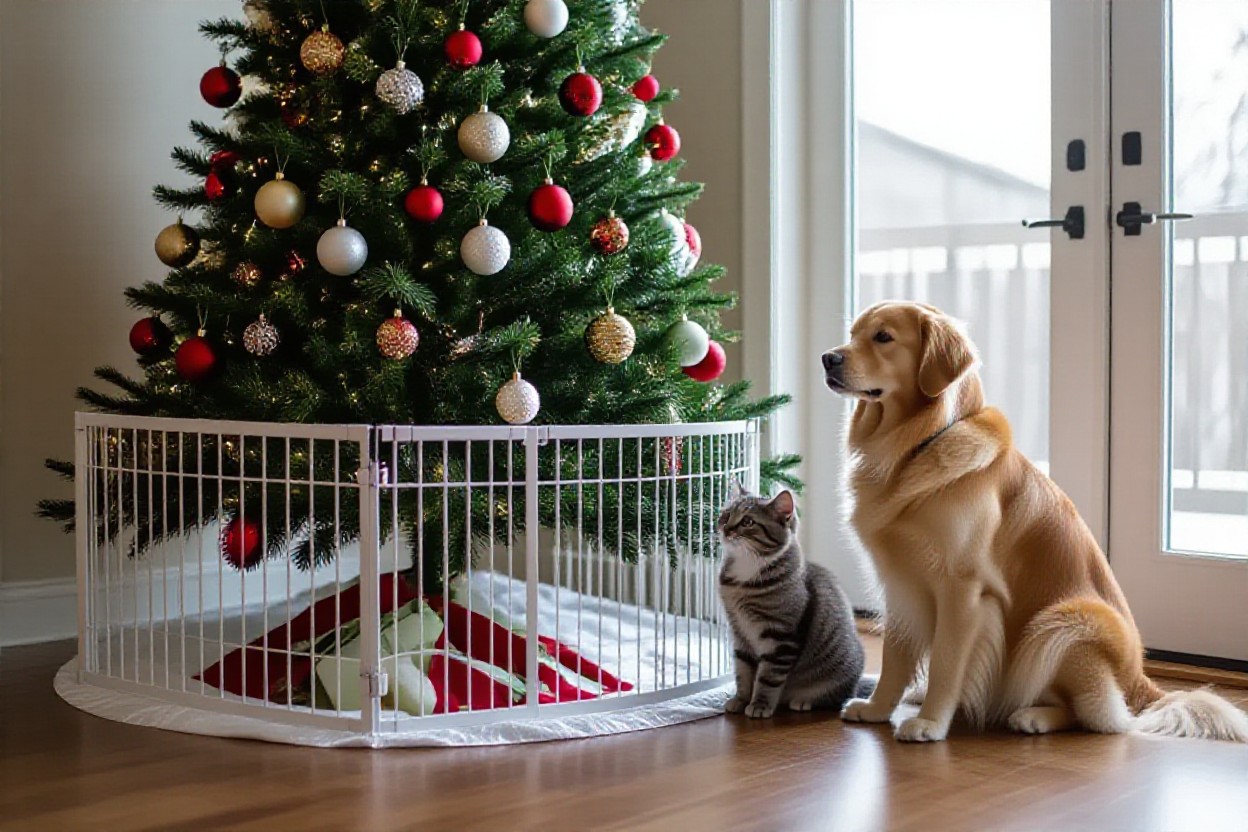
My Top Tips for Keeping Pets Away from the Tree
34% of pet owners report holiday trees getting knocked or chewed, so you should stack simple defenses that actually work. Use a low, heavy base, raise fragile ornaments out of reach and give your pets engaging toys so the Christmas tree isn’t the only option – short training bursts and tasty rewards help, too. Try combining a physical barrier with smell deterrents and supervision, it’s not magic but it works. Perceiving what triggers your animal will let you pick the best mix.
- Secure base and wall-anchoring
- Pet barriers like gates or exercise pens
- Scents and distractions (safe options)
Setting Up Pet Barriers
60% fewer tree incidents are reported by owners who install gates or pens, so you should consider a 2-3 foot radius barrier using a tall pet gate or exercise pen; you can even use clear Plexiglas for a cleaner look. Anchor the tree to the wall, put ornaments higher up, and route cords away – exposed wiring is dangerous. If you’ve got a curious cat, set the barrier 1-2 feet out so they can’t swat at low branches, and give them a window perch nearby instead.
Using Scents to Deter
About 70% of cats and many dogs avoid citrus or menthol smells, so you can use that to your advantage: place orange peels or cotton balls dabbed in diluted citrus oil around the tree base, but never let your pets ingest peels or oils. Test one spot first, reapply every 24-48 hours, and avoid spraying oils directly on ornaments or near food bowls since some necessary oils are toxic.
25 drops of citrus necessary oil in 500 ml water makes a mild spray you can use on tree skirts and peripheral surfaces, but don’t spray on the tree itself or on pet bedding – that ups the risk of ingestion. You could buy commercial pet-safe repellents too; they often list active ingredients and vet recommendations, so check labels. If your pet keeps investigating, combine scent with barriers and extra playtime – it usually takes 3-7 days for them to lose interest.
What to Do If Your Pet’s Already Snooping
It matters because once your pet starts snooping, the tree quickly becomes a source of injury or ingestion – and you want to stop that fast. If they’re pawing or chewing, call them away calmly, unplug the lights, and remove tempting items like tinsel, low ornaments, and cords. If you see broken glass or suspect they swallowed something, check for vomiting or lethargy and call your vet right away. Quick, calm moves prevent a collapsed tree or an emergency trip.
Redirecting Their Attention
Try swapping focus with a high-value distraction – you want something better than the tree. Use 10-15 minute play sessions twice a day, a flirt pole for dogs, or a laser/feather wand for cats, then reward with a treat. Clicker training or the “trade-up” method works great: offer a cheap toy, then swap for a better one plus praise. Consistency matters, and immediate rewards teach them fast.
Safe Alternatives to Explore
Offer engaging, safe options so the tree isn’t the only fun thing in the room: cat grass and puzzle feeders for cats, KONGs and chew toys for dogs, elevated cat trees placed away from the tree, and shatterproof ornaments up high. Avoid tinsel and keep toxic plants like poinsettias, mistletoe, and holly well out of reach – those are real hazards.
For specifics: stuff a KONG with plain yogurt, canned pumpkin, or unsweetened peanut butter and freeze it for 1-2 hours to create a long-lasting distractor. Plant a cat grass kit – it usually sprouts in 5-7 days – and rotate 3-4 toys weekly to keep novelty. Place a scratching post within 1-2 feet of the tree to redirect cats, and swap treats immediately when they choose the toy not the ornament.
Seriously, What About Christmas Decorations?
You can deck the halls and still keep your pets out of trouble. You’ll want to prioritize visibility and texture-bright, bulky items are less tempting to nibble than shiny, dangly bits. Vet clinics see spikes in ingestion injuries every December, so swap glass and tinsel for safer options, secure low branches, and anchor heavy pieces so your tree won’t topple if your cat bolts. You’ll sleep better, and your furry crew will too.
Choosing Pet-Friendly Ornaments
Pick ornaments that won’t shatter or shed small parts, like shatterproof plastic balls, felt decorations, or chunky wooden pieces about 2.5 cm (1 inch) or larger so they’re hard to swallow. You can use ribbon ties instead of hooks to avoid sharp wire, and test anything labeled “decorative” by tugging loose bits-if it comes off, it’s not for your tree. Swap edible-looking decor (chocolate, popcorn) for safe faux alternatives.
- Shatterproof plastic or resin – less mess, fewer cuts.
- Fabric or felt ornaments – soft, low risk if chewed.
- No small parts under ~2.5 cm – choking hazard for dogs and cats.
- Assume that tinsel and tiny glass baubles
| Shatterproof plastic | Durable, low risk of cuts, pick sizes >2.5 cm |
| Felt/fabric | Soft, chewable but usually non-toxic, inspect for stuffing |
| Wood (smooth) | Sturdy, avoid splintering types, seal edges |
| Glass | High injury risk – breaks into sharp shards |
| Wrapped ribbon | Safer hook alternative, tie securely to branches |
The Best Types of Garland and Fluff
Cats treat most dangly garland like an invitation to play, so favor chunky, non-reflective options: think felt, fabric bunting, or wide burlap strands rather than tinsel or thin metallic garlands that can shred and get swallowed. You should avoid anything with loose threads or exposed wire, anchor garlands high and tight, and consider securing ends with clear clips so your cat can’t pull a strand down like a rope toy.
Go for garlands that won’t fray into long threads-yarn and string are surprisingly deadly if ingested, causing intestinal blockages; use felt, burlap, or wide artificial greenery with plastic-coated stems instead. Measure lengths so nothing drapes within 30 cm of the floor, and test the strength by giving a firm tug-if it detaches easily, it’ll probably come down in play. Faux greenery with securely embedded tips is the best mix of realism and safety.
- Felt garland – soft, non-toxic, no threads.
- Burlap or fabric bunting – bulky, less tempting to pull.
- Faux greenery with sealed tips – realistic but safer than loose needles.
- Assume that tinsel, yarn, and thin metallic strands
How to Train Fido and Fluffy Not to Go Near the TreeWith a recent uptick in holiday-related pet injuries many owners are shifting from reactive fixes to training first. Teach a clear boundary – a rug or baby gate works – pair it with a verbal cue like “stay back” and run short 5-10 minute sessions, 2-3 times daily. Use high-value treats, practice with the tree fully decorated, and offer an appealing alternative like a puzzle feeder across the room. Tinsel and glass ornaments are dangerous, so you want reliable responses fast.Simple Commands to UseStart with “leave it” and “off” for dogs, and firm redirection for cats plus a rewarded alternative spot; teach “place” so your pet has a clear, comfy zone 1-2 meters from the tree. Do 30-second to 2-minute drills, reward immediately with high-value treats, then add distractions – jingling, lights, wrapping paper rustle. Aim for 8 successes out of 10 before raising difficulty, and keep sessions fun so your pet actually wants to comply.Consistency is KeyEveryone in the house must use the same cues and rewards, because mixed messages wreck progress; set a two-week routine of 5-minute sessions and you’ll see real change. Make the rule clear: tree area = off-limits, no exceptions for guests, and stick to it so your pet learns predictable outcomes. Consistency across people and timing is crucial.Track progress in a simple log – date, session length, success rate and distraction level – that way you can spot patterns and tweak training. Progressively increase challenge: start 2 meters away, then 1.5, 1, and finally beside the tree with someone dropping a noisy ornament; reward every correct response early, then move to rewarding about 60-70% of successes after two weeks to build endurance. If regression shows up, shorten sessions and rebuild from the last reliable step.The Real Deal About Holiday HazardsYou walk in and the tree looks perfect – your cat’s batting tinsel and your dog has the corner of a light cord in his mouth. What do you do? Stop the show before it starts: tinsel and ribbon can cause fatal intestinal blockages, chewed cords risk electrocution and fire, and plants like mistletoe or holly can make pets seriously sick. Vets see holiday spikes in emergencies, so act fast and move hazards out of paw’s reach.Toxic Plants and Christmas LightsYour cat noses a poinsettia – cute, right? But poinsettias usually cause only mild GI upset while mistletoe and holly can trigger vomiting, drooling and worse in small pets. Pine needles can puncture mouths or gut linings and cause irritation. Lights aren’t innocent either – chewing electrical cords can give a nasty shock or start a fire, so use LED strings, keep cords tucked up high and tape them down where pets can’t reach.What Not to Leave Under the TreeYou stash presents, a bowl of chocolate and a plate of cookies under the tree – classic move, but risky. Chocolate is toxic to dogs and cats; xylitol in sugar-free gum or some nut butters causes life-threatening low blood sugar in dogs. Loose batteries, small ornaments and tinsel are choking and blockage hazards, and glass ornaments can shatter and cut paws.Put gifts in a closet or on a high shelf until morning – even a quick scent can send a determined pet. Tape battery compartments on toys and stash batteries separately, swap fragile glass ornaments for shatterproof ones on lower branches, and keep edible or alcohol-containing items at least 3 feet away from the tree trunk. These small moves prevent most of the emergency calls vets get in December.Summing upUltimately, have you ever wondered how you can keep your pets from turning the Christmas tree into a wreck? You can set up barriers, anchor the tree, use pet-safe deterrents and keep tempting ornaments out of reach – and yes it takes effort, but it works. Use distraction with toys and treats, supervise when guests are around, and reward good behavior; stick with it and your tree survives. It’s doable, you’ll get the hang of it.
| Felt garland | Low-fray, soft, easy to spot and secure |
| Burlap bunting | Bulky, less likely to be played with, rustic look |
| Paper garland | Lightweight but tears easily-supervise around chewers |
| Tinsel | High ingestion risk – avoid entirely |
| Faux greenery (plastic) | Durable if tips are sealed, avoid exposed wires |