
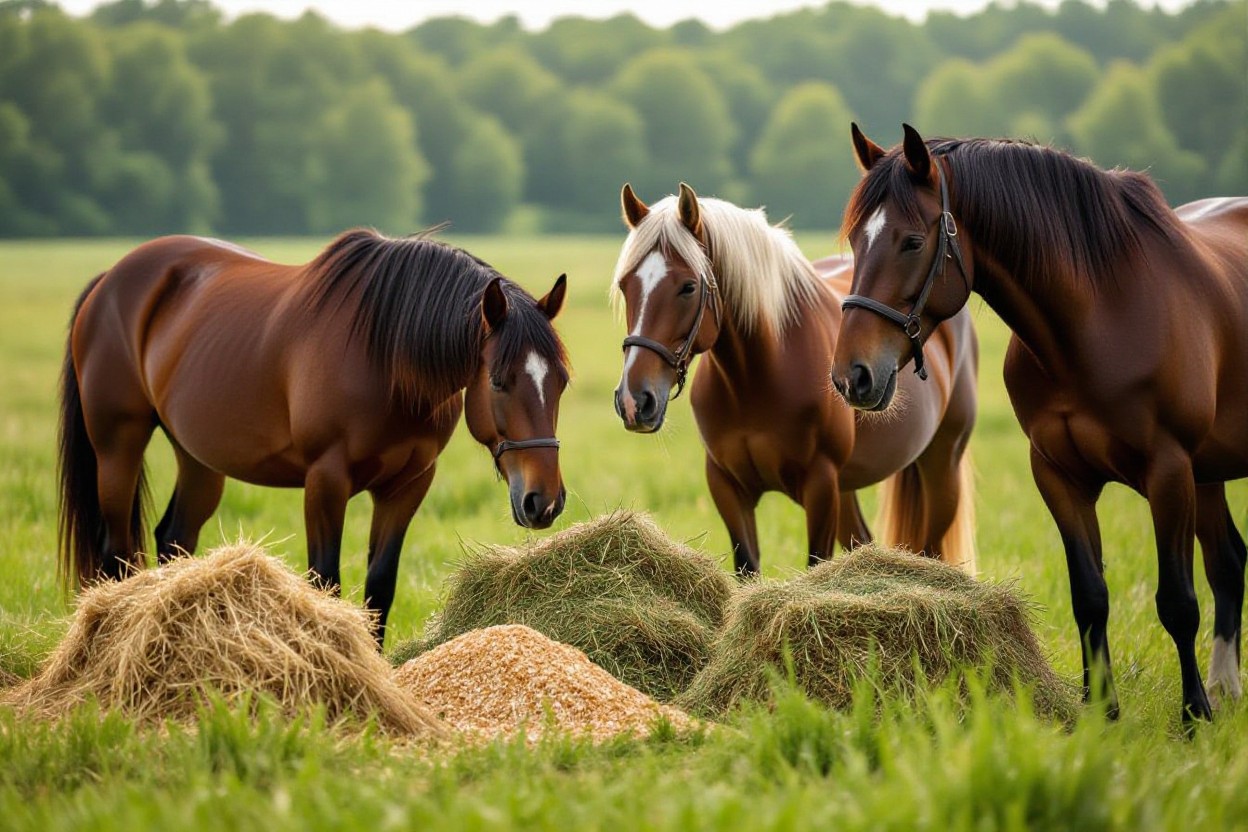
There’s an enormous variety of horse breeds worldwide; you need to know that sizes, temperaments and susceptibilities differ—light breeds like Arabians and Thoroughbreds excel in endurance and eat mainly forage (grass, hay) with controlled concentrates; draft breeds such as Percherons and Clydesdales require more calories and strong hoof care; ponies like Shetlands are hardy but prone to obesity and laminitis; foals need milk; always give your horse fresh water and balanced minerals.
Key Takeaways:
- For every listed breed provide this compact profile: origin/region, typical height and weight range, build and common uses (riding, driving, draft, pleasure, sport, conservation), typical temperament and coat/colors, and specific feeding notes (forage type, daily forage as % bodyweight, typical concentrates/supplements and any special dietary considerations).
- Universal feeding framework for all breeds: forage (good‑quality pasture or hay) should supply roughly 1.5–2.5% of bodyweight (dry matter) daily; free access to clean water (20–45 L/day depending on size/activity); salt/mineral block; concentrates (grains, pelleted feeds) only to meet energy/protein needs after forage; adjust calories, protein and supplements for workload, life stage and body condition; monitor body condition score and dental/parasite health and adjust feed.
- Life‑stage and type adjustments common to all breeds: foals/lactating mares need higher protein and energy (creep feed, milk replacer if required); growing horses 12–16% protein feeds; performance/sport horses need increased energy (fat, concentrate) and electrolytes; senior/dental‑problem horses need soaked/complete feeds or mash; ponies and “easy keepers” need restricted non‑structural carbohydrate (NSC) diets to reduce laminitis risk; large draft breeds need lower energy density but adequate fiber and controlled concentrates to avoid obesity and metabolic issues.
- Representative breed examples with concise facts and feeding notes (apply same profile format to all other breeds):
- Arabian — origin: Arabian Peninsula; 14.1–15.1 hh, 350–450 kg; refined, endurance; diet: efficient metabolizers, forage‑based diet with controlled concentrates to prevent weight loss or metabolic issues.
- Thoroughbred — origin: England; 15.2–17.0 hh, 450–600 kg; racing/sport; diet: high‑energy concentrates and fat supplementation for training, increased electrolytes, high‑quality forage to maintain gut function.
- American Quarter Horse — origin: USA; 14–16 hh, 450–550 kg; stock/work/recreation; diet: balanced forage with moderate concentrates for performance, watch for tying‑up/insulin issues in susceptible lines.
- Clydesdale — origin: Scotland; 16–18 hh+, 700–1000+ kg; heavy draft; diet: high‑fiber, moderate energy, avoid overfeeding concentrates to prevent obesity and founder, salt/minerals for large body mass.
- Shetland Pony — origin: Shetland Islands; 7–10 hh, 150–200 kg; children’s pony/drive; diet: sparse grazing or soaked hay to prevent laminitis, minimal concentrates unless under work, careful weight control.
- Mongolian horse — origin: Mongolia; variable height, hardy; traditional nomadic grazing; diet: predominantly native pasture/hay, very hardy and adapted to coarse forage, minimal concentrates.
- Mustang — origin: feral North America; medium build, hardy; diet: primarily grazing of range grasses and shrubs, adapted to sparse forage, monitor for parasite load and dental wear.
- Appaloosa — origin: North America; 14–16 hh, 400–540 kg; stock/recreation; diet: forage first, balanced concentrate for work, monitor skin/coat care and metabolic signs.
- Lipizzaner — origin: Austria/Spain lineage; 15–16 hh, 450–600 kg; classical school/dressage; diet: quality forage with controlled concentrates for muscle maintenance and exercise, electrolyte management during intense training.
- Percheron — origin: France; 15.2–17.3 hh, 600–900 kg; draft/ride; diet: high‑fiber, controlled concentrates for work, ensure joint and hoof care with correct nutrition.
- Health and management signals tied to breed groups: ponies and some native breeds frequently need NSC‑restricted diets to avoid laminitis; high‑performance breeds require energy, protein and electrolyte management plus ulcer prevention; drafts require controlled energy intake to prevent obesity; feral and rustic breeds thrive on coarse forage and need careful transition to domestic rations; across all breeds maintain regular dental care, vaccination, deworming and body condition monitoring and tailor supplements (vitamins, minerals, joint, gastric support) to each breed’s workload and metabolic tendencies.
Types of Horses
| Arabian horse: Lightweight, endurance-built; you’ll note a dished face and high tail carriage. Diet: primarily grazing and quality hay, 1.5–2% bodyweight/day; sensitive to rich concentrates. | Thoroughbred: Bred for speed; lean muscle and deep chest. Diet: high-energy forage plus concentrates for performance; monitor for gastric ulcers during intense training. |
| Quarter Horse: Powerful hindquarters for sprinting and ranch work. Diet: forage-based with supplemental grain for heavy work; common in Western disciplines. | Friesian: Heavy-feathered, elegant carriage; needs regular hoof and feather care. Diet: substantial forage, moderate concentrates to avoid obesity. |
| Clydesdale: Draft breed, large frame and heavy bone. Diet: high-volume forage and mineral-rich rations; watch for joint stress and weight management. | Mustang: Feral-origin, hardy and efficient metabolizers. Diet: thrives on sparse native grasses; you should limit rich feeds to avoid laminitis. |
| Andalusian: Iberian light draft, bold collection and agility. Diet: quality hay, controlled concentrates to maintain topline; prone to tying-up if electrolyte balance poor. | Icelandic horse: Small but strong, unique gaits (tölt). Diet: northern hay and limited grazing; sensitive to lush pastures—monitor for weight gain. |
| Appaloosa: Spotted coat, versatile performance horse. Diet: forage-first, balanced minerals to support skin and eye health in some lines. | Shetland Pony: Compact, very efficient feed converters; at high risk of obesity and laminitis on rich pasture—strict rationing required. |
- Arabian horse — endurance, 1.5–2% BW forage/day.
- Thoroughbred — speed, high-energy feeds with ulcer prevention.
- Clydesdale — draft, large forage intake and joint care.
- Mustang — hardy, low-nutrient rations to prevent laminitis.
- Shetland Pony — prone to obesity, strict grazing management.
Breeds
You’ll encounter hundreds of named breeds from the Arabian to the Zaniskari; each was developed for specific tasks like draft work, racing, or mountain transport. When you select a breed, check typical height (pony <14.2 hh), average weight ranges (e.g., Clydesdale 800–1,200 kg? adjust units per region) and inherited health traits that affect feeding and care.
Characteristics
You should assess conformation, gait, temperament and metabolic type: hot-bloods (e.g., Thoroughbred) need more energy for work, cold-bloods (e.g., Belgian) require more bulk feed and joint support, and ponies demand calorie restriction to avoid laminitis.
In practice you can classify horses by use (racing, driving, riding), size (pony vs horse), and metabolism: for instance, an adult riding horse at maintenance typically eats 1.5–2% of its bodyweight in dry matter as forage—roughly 8–12 kg/day for a 500 kg horse. Performance horses may need extra calories via concentrates or fats; draft breeds need adequate minerals for bone and hoof health; and ponies need measured rations and limited access to rich pasture to prevent insulin-related laminitis. Any specific feeding plan should be tailored to your horse’s breed, body condition score, workload and local forage quality.
Nutritional Needs of Horses
Basic Dietary Requirements
You should provide free-access forage at about 1.5–2.5% of body weight (dry matter) daily — a 500 kg horse therefore needs roughly 7.5–12.5 kg of forage. Water must be available at all times, typically 20–40 liters per day depending on activity and weather. Include a salt block and monitor body condition weekly. Insufficient forage or abrupt diet changes increase risk of colic and gastric ulcers, while steady high-quality hay supports gut motility and coat condition.
Essential Nutrients
You need to balance energy (forage, starch, fats), protein, fiber, vitamins and minerals. For maintenance aim for ~8–12% crude protein in the total ration; foals and lactating mares often require 14–18% protein. Keep the dietary Ca:P ratio near 1.5–2:1. Selenium and vitamin E are region-dependent supplements. High-grain rations raise energy but increase risk of laminitis and digestive upset if fed improperly.
Thinking about specific types helps: heavy breeds like Clydesdale or Percheron need bulky, lower-energy rations to avoid obesity, while performance breeds (Thoroughbred, American Quarter Horse) can require 20–50% more energy than maintenance, met with controlled concentrates and added fat. Ponies and native types (Shetland, Exmoor, Icelandic, Mustang) are prone to insulin issues and do better on low-NSC forage or soaked hay (target NSC ≤10–12% for laminitis-prone animals). Senior horses benefit from more digestible protein and added oil or beet pulp if dental wear limits chewing.
Common Feeds for Horses
Forage Options
Aim to provide 1.5–2% of your horse’s bodyweight daily in forage: good choices include timothy, orchardgrass, mixed pasture and alfalfa for higher-protein needs. Forage quality matters—test hay for NSC; keep low-NSC (<10–12%) hay for laminitis-prone types like Shetland Pony, Icelandic, Welsh and native ponies. You should balance pasture intake with hay, and soak dusty hay for horses with respiratory issues.
Concentrates and Supplements
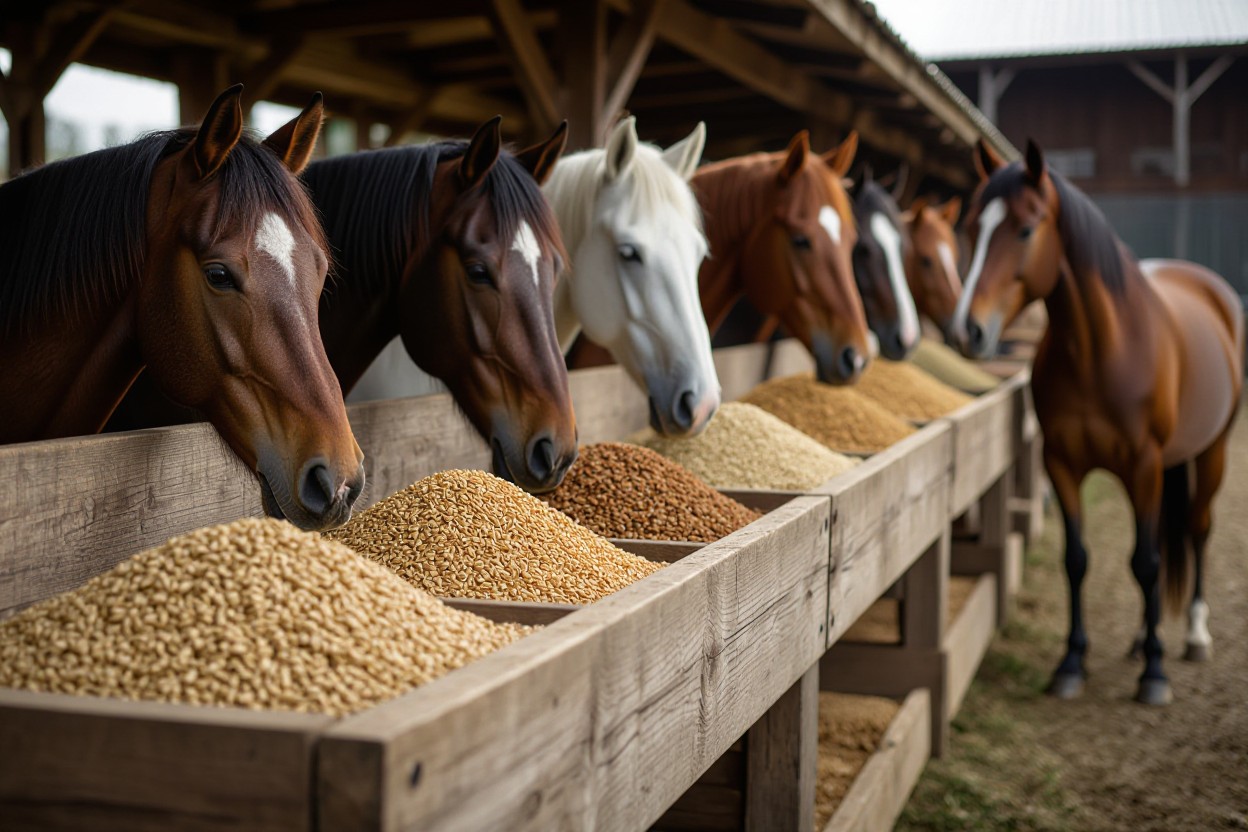
When forage won’t meet energy needs, add concentrates: oats, pelleted feeds, corn/barley mixes, or fat-enriched feeds. Performance breeds such as Thoroughbred and American Quarter Horse often receive 0.5–1.5% bodyweight in concentrates (a 500 kg horse = 2.5–7.5 kg/day). Always offer free-choice salt and a mineral block. Take care: overfeeding concentrates raises colic and laminitis risk, so divide meals.
Check ingredient lists and match feed to use: endurance horses (Arabian) need more digestible fiber and electrolytes, while draft breeds (Clydesdale, Percheron) require more total calories. Consider beet pulp or rice bran for extra calories without starch; add biotin at about 15–20 mg/day to support hooves if warranted. You should introduce changes gradually and split concentrate into at least two daily feeds to limit starch load per meal.
Special Considerations in Feeding
Age and Health Factors
You must adapt rations for growth, reproduction and decline: foals need higher protein (about 14–18% protein) and frequent access to quality forage; seniors require nutrient-dense, easily chewed feeds due to dental wear and reduced gut efficiency; horses with PPID or insulin resistance need low sugar/starch rations; lactating mares need extra energy.
- Foal: growth protein, creep feed
- Seniors: soaked hay, senior mix
- Metabolic: low NSC feeds
- Dental: floating, chopped/soft feeds
Perceiving how dental wear, age, and metabolic status interact guides your ration adjustments.
Activity Levels
You should scale forage and concentrates to workload: maintenance horses do well on 1.5–2% bodyweight in forage (a 500 kg horse = ~7.5–10 kg hay), light to moderate work often needs extra concentrate or higher-energy hay, and heavy athletes require further calories, electrolytes and protein for repair; monitor body condition and performance markers rather than feeding by habit.
For example, a 500 kg eventer in moderate training may be fed ~2% BW forage plus 2–4 kg of a performance mix, while an endurance Arabian benefits from added fat (oil or rice bran) and electrolyte replenishment post-ride; sprinters or racehorses need rapidly available carbohydrates but must be managed to avoid starch overload and tying-up or laminitis in susceptible breeds—you should adjust timing (smaller concentrates away from immediate intense exercise), weigh feeds weekly, and track manure, hydration and recovery to fine-tune rations.
Feeding Practices and Routines
Feeding Schedule
You should offer forage continuously or at least 16 hours daily to support gut motility; for a 500 kg horse that means about 7.5–10 kg hay (1.5–2% bodyweight) split into multiple feedings. Performance breeds like Thoroughbred and Arabian often need 3–4 meals including concentrates, while ponies and native breeds (Shetland, Exmoor, Icelandic) do better with restricted grazing and smaller, more frequent forage portions. Avoid fasting beyond 6–8 hours to reduce colic risk.
Portion Control
Match portions to bodyweight, workload and breed: forage at 1.5–2% BW and limit concentrates to <0.5% BW per meal—so a 500 kg horse should get no more than about 2–3 kg grain per meal. You must lower calorie intake for easy-keepers (Welsh, Pony, Spanish Barb) and increase for hard-working or high-metabolism types (Akhal-Teke, Anglo-Arabian).
Weigh hay and feeds with scales or measured scoops: a 600 kg Percheron typically needs ~9–12 kg hay/day, whereas a 450 kg Arabian in moderate work may require ~7–9 kg hay plus 3–4 kg concentrates divided. Use the Henneke body condition score (1–9) aiming for 4–6 and adjust weekly. When pasture is lush, limit turnout or use a grazing muzzle and soak hay 30–60 minutes to reduce sugars for laminitis-prone breeds like Exmoor, Shetland and Welsh.
Common Feeding Mistakes
Overfeeding and Underfeeding
Feeding too much concentrate or too little forage creates problems: horses should get about 1.5–2% of their body weight in forage daily (a 500 kg horse = 7.5–10 kg hay). Overfeeding energy-dense feeds leads to obesity and laminitis—Shetland ponies and native breeds founder easily—while underfeeding performance breeds like Thoroughbreds and Quarter Horses causes rapid weight loss, poor muscle and decreased performance.
Ignoring Individual Needs
Not all breeds eat the same: an Arabian often needs higher-energy rations for work, a Clydesdale requires large volumes of forage, and an Icelandic or Przewalski’s-type will gain weight on rich pasture. Ignoring this leads to metabolic syndrome, colic, or poor condition; you should match feed to bodyweight, age, workload and breed tendencies.
Use body condition scoring (BCS 1–9, with 5 ideal) and a weight tape to set rations: a 450–500 kg native pony on light work may need only 7–9 kg hay/day, while a 500 kg sport horse in heavy work needs more energy from additional concentrate or fat sources. Adjust for life stage—growing foals require higher protein (~14–16% CP), late-gestation/lactating mares may need a 15–25% increase in energy—and for dental issues or older donkeys by offering soaked forage or senior feeds. Employ feed analysis, grazing muzzles, slow feeders, or a ration balancer for horses prone to obesity, and document changes weekly to catch weight trends before they become dangerous.
To wrap up
Following this you can classify the many breeds—light (Arabian, Thoroughbred, Akhal-Teke, Quarter Horse, Anglo-Arabian, Anglo-Kabarda), warmbloods (Hanoverian, Dutch Warmblood, Swedish Warmblood, Trakehner), ponies (Shetland, Welsh, Connemara, Exmoor), drafts (Percheron, Clydesdale, Belgian, Shire, Suffolk Punch, Ardennes), feral/primitive (Mustang, Przewalski’s, Brumby, Tarpan)—each differs in size, temperament and work. Your feeding is forage-first (grass/hay), with grains, concentrates or oils for high-energy or working breeds; foals need milk and creep feed; hardy mountain and cold-climate types thrive on sparse forage; monitor body condition and electrolytes.
FAQ
Q: What are every listed horse and pony type with a brief description and what they typically eat?
A: Abaca Barb — North African-derived type; riding/stock; light to medium size; diet: primarily forage (pasture/hay), supplemented with concentrates for work, salt/minerals, fresh water. Abaga horse — Central Asian steppe type; riding/pack; forage-based diet, extra calories for hard use. Abtenauer — Austrian/Alpine small horse; versatile mount; eats meadow hay, pasture, small amounts of grain if active. Aegidienberger — German gaited sport horse; riding/pleasure; forage plus conditioned concentrate for performance. Akhal-Teke — Turkmenistan endurance breed; fine-boned, athletic; eats grass/hay, energy feeds for long work, minerals. Albanian horse — Balkan mountain type; hardy; mainly pasture/hay, little concentrate. Algerian — North African riding/working horse; forage-based, increased grain for heavy work. Altai horse — Siberian mountain pony; very hardy; roughage from sparse forage and hay, little grain. Altwürttemberger — German warmblood; sport horse; forage plus tailored concentrates for training. American Cream Draft — US draft; heavy work/pleasure; large-quantity forage, grain for energy, mineral blocks. American Indian Horse — historic Native American type; versatile; forage supplemented with concentrates as needed. American Miniature Horse — small companion type; small amounts of quality forage, limited grain, careful calorie control. American Paint Horse — stock horse; forage, concentrates for performance, salt/minerals. American Quarter Horse — stock and performance; pasture/hay, concentrates for speed/power work. American Saddlebred — show/pleasure riding; forage plus moderate concentrates. American Shetland Pony — small but strong pony; forage-limited to avoid obesity, small grain if active. American Sugarbush Harlequin Draft — heavy draft type; forage-dominant, extra grain and fiber for work. American Walking Pony — gaited pony; hay/pasture, small concentrate as needed. Andalusian — Iberian riding horse; forage plus moderate concentrates for sport. Andravida horse — Greek heavy/light riding; forage-based, grain for work. Anglo-Arabian — cross of Thoroughbred and Arabian; sport horse diet of high-quality forage and performance concentrates. Anglo-Kabarda — endurance/working type from Caucasus; predominantly forage, extra energy when working. Appaloosa — spotted stock breed; forage plus concentrates for activity, attention to parasite control. AraAppaloosa — Appaloosa cross type; similar diet to Appaloosa. Arabian horse — hot-blooded endurance breed; quality forage, controlled concentrates to maintain condition. Ardennes horse — heavy draft from France/Belgium; large forage intake, grain for heavy draft work. Arenberg-Nordkirchen — regional German type; forage with added grain as required. Argentine Criollo — South American endurance/working breed; hardy on pasture/hay, little grain. Argentine Polo Pony — athletic polo mount; forage plus high-energy concentrates and conditioning supplements. Asturcón — Spanish small gaited pony; forage-based, modest concentrates. Australian Draught — Australian heavy draft; large amounts of hay and grain for work. Australian Pony — versatile small pony; pasture/hay, limited concentrates. Australian Riding Pony — show/pleasure; forage plus moderate concentrates. Australian Stock Horse — stock and performance; forage, conditioning concentrates for work. Austrian Warmblood — sport horse; forage plus sport-specific concentrate rations. Auxois — French heavy horse; high forage, grain for draft tasks. Azteca horse — Mexican sport/working cross; forage, concentrates for performance. Baise horse — Chinese local saddle/pack type; forage-dominant. Balearic horse — Mediterranean island type; pasture/hay, moderate grain. Balikun horse — Chinese mountain type; hardy on sparse forage, occasional grain. Banker horse — feral barrier island pony (U.S.); grazed on salt marshes, minimal supplements in wild. Barb — North African riding breed; hardy on pasture/hay, moderate concentrates for performance. Bashkir horse — Russian mountain/steppe pony; roughage-based, small grain allowances. Basque Mountain Horse — Pyrenean type; forage-based. Basuto pony — South African hardy pony; pasture/hay, scant grain. Bavarian Warmblood — German sport horse; forage plus performance feeds. Belgian — heavy draft; very large forage intake, grain for work. Belgian Warmblood — sport horse; quality hay, performance concentrates. Bhutia Pony — Himalayan small pony; hardy on sparse forage. Black Forest Horse — German draft; forage-dominant, extra grain for work. Blazer — (regional type) similar to stock horse; forage and concentrates for activity. Boerperd — South African riding/stock horse; pasture/hay, grain for work. Bosnian Mountain Horse — Balkan mountain horse; hardy forage diet. Boulonnais — French draft; heavy forage, grain for draft use. Brabant — Belgian heavy draft; large forage intake, energy-dense concentrates. Brandenburger — German sport/utility; forage plus training ration. Brazilian Sport Horse — sport/show; forage and tailored concentrates. Breton — French draft; forage-dominant, grain for heavy work. Brumby — Australian feral horse; survives on native pasture, very lean forage. Budyonny horse — Russian riding/sport; forage plus concentrates for performance. Burguete — Spanish heavy/working horse; hay/pasture, supplemental grain. Byelorussian Harness Horse — Eastern European harness type; forage plus grain for harness work. Calabrese horse — Italian type; pasture/hay with concentrates when ridden. Californio — historical Californian type; forage, light grain. Camarillo White Horse — U.S. show/pleasure; forage and balanced concentrate. Campolina — Brazilian gaited breed; forage and supplemental concentrate for shows. Canadian horse — Canadian cold-hardy breed; pasture/hay, grain in winter. Canadian Rustic Pony — small cold-hardy pony; forage with minimal concentrates. Carolina Marsh Tacky — Southeastern U.S. working pony; forage-based. Carthusian horse — Spanish line of Andalusian; quality forage, controlled grain. Caspian — Iranian small ancient breed; forage and small amounts of concentrates. Castillonnais — French riding/pack type; forage and grain as needed. Cayuse horse — historical American type; foraging on pasture. Cleveland Bay — English carriage and riding horse; hay/pasture, concentrates for work. Clydesdale — Scottish draft; high forage, grain for work and recovery. Cob — stocky riding type (varies); forage and concentrates based on activity. Coldblooded Trotter — Scandinavian harness type; forage plus energy feeds for trotting. Colorado Ranger — American ranch horse; forage, grain for heavy ranch work. Comtois horse — French draft; forage-dominant, grain for draft work. Connemara Pony — Irish versatile pony; good-quality forage, minimal concentrates unless performance. Corsican horse — island pony; hardy on pasture. Costarricense de Paso — Costa Rican gaited breed; forage and performance concentrates. Criollo — South American working/stock horse; survives on pasture/hay, little grain. Croatian Coldblood — draft; forage and grain for work. Cuban Paso — Cuban gaited type; forage-based with moderate concentrates. Curly — North American curly-coated breed; forage-based, allergy-friendly for handlers, concentrates if working. Dales Pony — UK hill pony; forage-dominant, limited concentrates. Danish Warmblood — sport horse; forage and training concentrates. Dartmoor Pony — small British hill pony; pasture/hay, careful grain to avoid obesity. Deliboz — Central Asian riding horse; hardy forage diet. Delta horse — regional U.S. type; pasture/hay, grain if working. Dole Gudbrandsdal (Dolehest) — Norwegian cold-hardy breed; forage-based with extra winter hay. Dongola horse — African saddle/stock type; pasture/hay, adapted to sparse forage. Dosanko — Japanese Hokkaido breed; hardy, forage-dominant. Dutch Harness Horse — show/harness; forage plus concentrated training rations. Dutch Warmblood — sport horse; quality hay, performance concentrates. East Bulgarian — regional Bulgarian riding type; forage-based with added grain for work. Eriskay Pony — Scottish island pony; forage plus minimal concentrates. Estonian Native — Baltic hardy pony; forage with limited grain. Exmoor Pony — British native; roughage from moorland, little grain. Faroese Pony — Faroe Islands pony; island forage and hay. Fell Pony — UK mountain pony; pasture/hay, small concentrates for ridden work. Finnhorse — Finnish versatile breed; forage and winter grain/hay. Finnish Horse — similar to Finnhorse; forage-based with extra feed for work. Finnish Warmblood — sport horse; forage and tailored concentrates. Flemish Horse — heavy draft; abundant forage, grain for draft. Florida Cracker Horse — American colonial-type; pasture-focused, light grain. Frederiksborg — Danish baroque horse; quality forage, concentrate for work. Freiberger — Swiss/Franche-Montagne breed; forage plus concentrates for performance. French Saddle Pony — pony for sport; forage and performance feed. French Trotter — harness/pace; forage plus energy-dense concentrates. Friesian — Dutch baroque riding horse; forage plus moderate concentrates for training/show. Friesian cross — varied; diet adjusted to size/use. Foal — young horse; mare’s milk then high-quality creep feed, access to forage, gradual introduction to concentrates for growth. Galiceno — small Mexican stock horse; forage-based, limited grain. Garrano — Portuguese pony; hardy on sparse pasture. Georgian Grande — Georgian riding/utility; forage and grain if worked. German Riding Pony — children’s sport pony; good hay, small performance feed. German Sport Horse — sport/competition; forage and concentrated energy/protein feeds. Giara horse — Sardinian small hardy breed; pasture/hay, low grain. Gidran — Hungarian warmblood; forage plus performance concentrates. Groningen — Dutch heavy harness/sport; forage and extra grain for activity. Guizhou horse — Chinese mountain type; primarily forage. Gypsy Cob — British cob type; forage and moderate concentrates. Gypsy Vanner — show/feathered cob; forage plus performance/conditioning feed. Hackney horse — show/harness; hay and concentrates for high-energy performance. Hackney Pony — harness pony; forage and small amounts of concentrate. Haflinger — Austrian/Italian mountain pony; good hay, minimal grain unless working. Hanoverian horse — major German sport horse; forage plus performance concentrates. Heck horse — Heck breeding to resemble Tarpan; hardy, forage-based. Heihe horse — Chinese cold steppe type; pasture/hay, little grain. Highland Pony — Scottish pony; roughage-based with added concentrates for riding. Hokkaido horse — Japanese local breed (Dosanko); forage-based. Holsteiner — German sport horse; quality forage and sport concentrates. Hungarian Warmblood — sport horse; forage with targeted concentrates. Icelandic horse — Iceland; small hardy breed; pasture/hay, minimal grain, sensitive to diet changes. Indian Country-bred — varied local types in India; forage-dominant. Irish Cob — stout Irish type; forage and concentrates for heavier work. Irish Draught — Irish heavy riding/working; forage plus grain for work. Irish Sport Horse — sport/competition; forage and high-quality concentrates. Italian Heavy Draft — heavy draft; large forage amounts, grain for work. Jaca Navarra — Spanish mountain pony; forage-based. Java Pony — Indonesian island pony; pasture/hay, little grain. Jeju horse — Korean island breed; hardy on pasture. Jutland — Danish heavy horse; forage-dominant, grain for draft. Kaimanawa horse — New Zealand feral mustang; grazes native pasture, minimal supplements in wild. Karabakh horse — Caucasus riding breed; forage and grain for work. Karacabey horse — Turkish native type; forage-based. Kathiawari — Indian desert horse; pasture/hay, drought-adapted forage. Kazakh horse — Central Asian steppe; survives on sparse forage, supplemental feed when working. Kentucky Mountain Saddle Horse — U.S. gaited breed; pasture/hay, concentrates for stamina. Kerry Bog Pony — Irish small pony; rough forage, minimal grain. Kiger Mustang — North American mustang type; pasture-based, hardy. Kiso horse — Japanese native; pasture/hay, light concentrates. Kladruber — Czech baroque carriage horse; forage plus conditioning feeds. Knabstrupper — Danish spotted breed; forage and concentrates for performance. Kundudo — Ethiopian feral/mountain type; grazes native vegetation. Kyrgyz horse — Central Asian saddle type; hardy on steppe forage. Latvian horse — Baltic type; forage with added grain for work. Lipizzaner — classical dressage horse; quality forage and sport concentrates. Lithuanian Heavy Draught — heavy draft; large forage intake, grain for work. Lithuanian Native — regional type; forage-dominant. Lokai horse — Central Asian riding breed; pasture/hay, moderate concentrates. Lusitano — Portuguese sport/dressage; forage and performance feeds. Mare — adult female horse; forage-based diet adjusted for condition, pregnancy, lactation. Mallorquin — Balearic island breed; pasture/hay, modest concentrates. Malopolski — Polish riding/sport; forage and work rations. Mangalarga — Brazilian riding breed; forage and performance concentrates. Mangalarga Marchador — Brazilian gaited sport horse; forage and conditioning feeds. Manipuri Pony — Indian small riding pony; forage, low grain. Marismeño — Spanish marsh horse; grazes wetlands, forage-dominant. Marwari horse — Indian desert breed; hardy on pasture/hay, little grain. Mayo Pony — Irish small pony; pasture/hay. McCurdy Plantation Horse — historic U.S. type; forage-based. Mecklenburger — German warmblood; forage and training concentrates. Menorquin — Balearic horse; forage with moderate concentrate. Merens horse — French mountain pony; roughage-dominant. Miniature Horse — companion small type; quality forage in small amounts, avoid overfeeding grain. Missouri Fox Trotter — gaited American breed; pasture/hay, concentrates for endurance. Miyako — Japanese island pony; pasture/hay. Mongolian horse — ancient steppe breed; survives on sparse forage, mares foal on pasture; little grain. Monterufolino — Italian small breed; forage-based. Morab — Morgan-Arabian cross; forage and performance concentrates. Morgan — American versatile breed; forage plus tailored grain for performance. Moriesian — cross of Morab and Friesian; forage and concentrates depending on use. Mountain Pleasure Horse — gaited pleasure type; forage and small concentrates. Moyle horse — rare U.S. type; forage-based. Mustang — feral North American horse; grazes native grasses, adapted to lean forage. Namib Desert Horse — Namibian feral horse; survives on sparse desert forage, supplemented when in care. National Show Horse — American show-type; forage and conditioning concentrates. New Forest Pony — British pony; pasture/hay, minimal grain. Newfoundland Pony — Canadian hardy pony; forage and hay in winter. Nez Perce Horse — U.S. Appaloosa-related gaited; forage and performance feeds. Nokota — North American feral/heritage type; pasture-based. Nonius — Hungarian riding/utility; forage and grain for work. Nordlandshest/Lyngshest — Norwegian mountain pony; roughage-dominant. Noriker — Austrian heavy/utility; forage and grain for draft tasks. Norman Cob — French robust riding/cob type; forage and concentrates for work. North Swedish Horse — Swedish cold-hardy draft; large forage, grain for work. Norwegian Fjord — primitive Nordic breed; forage, high-fiber diet, limited concentrates. Oldenburg — German warmblood; forage and high-quality performance feeds. Old Kentucky Saddler — U.S. saddle type; forage plus conditioning concentrates. Orlov Trotter — Russian trotting horse; forage and energy concentrates. Paso Fino — Latin American gaited breed; pasture/hay with performance concentrates. Pentro Horse — Italian regional type; forage-dominant. Percheron — French draft; large forage intake, grain for heavy pulling. Peruvian Horse — Peruvian Paso gaited; forage and conditioning concentrates. Pintabian — Arabian/paint-type; forage and controlled concentrates. Pleven horse — Bulgarian warmblood; forage and sport feeds. Poitevin Mulassier — French heavy breed used for mule production; forage and grain. Poney Mousseye — regional pony type; forage-dominant. Pottoka — Basque pony; roughage-based. Przewalski’s horse — wild Asian wild horse; grazes steppe grasses and shrubs; in captivity fed hay and native browse. Pura Raza Galega — Spanish Galician breed; forage and moderate concentrates. Pura Raza Española — Andalusian type; forage and quality concentrate for sport. Purosangue Orientale — Oriental thoroughbred-type; forage with performance feed. Quarab — Quarter Horse x Arabian cross; forage and concentrates tailored to use. Quarter Horse — American stock breed; pasture/hay plus grain/protein for heavy work. Quittor horse — (historical/pathological term); if living, forage and veterinary care as needed. Racking Horse — gaited American show breed; forage and concentrates for stamina. Retuerta — Iberian primitive breed; pasture/hay, low-grain. Rhenish German Coldblood — German draft; large forage intake, grain for work. Riwoche horse — Tibetan primitive horse; grazes alpine forage. Rocky Mountain Horse — gaited American; forage and small concentrates, often copper/selenium attention. Romanian Sport Horse — sport breed; forage and performance concentrates. Russian Don — Russian cavalry/type; forage plus grain for work. Russian Heavy Draft — large draft; high forage, energy-dense grains. Russian Trotter — trotting breed; forage and concentrated energy for racing. Sable Island Horse — Canadian feral pony; grazes island vegetation, limited supplementation. Salerno horse — Italian regional type; forage-dominant. San Fratello horse — Sicilian regional breed; pasture/hay. Sardinian Anglo-Arab — Sardinian sport cross; forage plus performance feeds. Sardinian Pony — island pony; roughage-based. Saxon-Thuringian Heavy Warmblood — German heavy warmblood; forage and work grain. Schleswig Coldblood — Danish/German draft; forage and grain for work. Schwarzwälder Kaltblut — Black Forest cold-blood; forage-dominant. Selle Français — French sport horse; forage plus high-performance concentrate and supplements. Sempione — Italian mountain type; forage-based. Shetland Pony — very small hardy pony; good forage but careful to prevent obesity, minimal concentrates. Silesian horse — Polish heavy/light type; forage and grain depending on work. Sorraia — Portuguese primitive type; pasture/hay, low grain. Soviet Heavy Draft — Soviet-era draft breeds; high forage and grain for work. Spanish Barb — North African/Spanish working horse; forage-based with added concentrates for riding. Spanish Jennet — historical gaited type; pasture/hay. Spanish Mustang — North American feral/heritage type; hardy on pasture, low grain. Spiti horse — Himalayan mountain pony; rough forage, very hardy. Standardbred — harness racing breed; forage plus high-energy concentrates for training and racing. Suffolk Punch — English draft; large forage intake and grain for work. Swedish Ardennes — Scandinavian draft; forage and grain for work. Swedish Warmblood — sport horse; forage and high-quality concentrates. Swiss Warmblood — sport horse; forage and tailored concentrates. Stallion — adult male horse; forage with diet adjusted for condition and activity, reproductive management may require extra calories. Taishū horse — Japanese island breed; pasture/hay. Tarpan — extinct/feral-type; reconstructed types forage on steppe grasses. Tennessee Walking Horse — gaited American; forage and concentrated feeds for performance. Tersk horse — Russian Arabian-influenced breed; forage and concentrates for sport. Thoroughbred — racing breed; high-quality forage and substantial concentrates for training and racing, careful energy balance. Tiger Horse — patterned/type breed; forage plus concentrates as used. Timor Pony — Indonesian pony; pasture/hay, little grain. Tokara horse — Japanese small island horse; pasture-dominant. Tori horse — Estonian riding/utility; forage and grain for work. Trait du Nord — French heavy draft; forage and grain for heavy draft. Trakehner — German warmblood; forage and high-quality performance concentrates. Ukrainian Riding Horse — Eastern European riding/sport; forage and work rations. Uzunyayla — Turkish native riding breed; forage-based. Ventasso Horse — Italian regional type; forage and moderate concentrates. Vlaamperd — South African riding/utility; pasture/hay. Vyatka horse — Russian regional breed; forage and grain in winter. Waler horse — Australian stock horse; pasture/hay, grain when worked. Walkaloosa — gaited Appaloosa-type; forage and performance concentrates. Welara — Welsh x Arab cross; forage and tailored concentrates. Welsh Cob — larger Welsh type; forage and concentrates for riding. Welsh Mountain Pony — small Welsh pony; pasture/hay, minimal grain. Welsh Pony — small versatile pony; forage and small concentrates for work. Welsh Pony and Cob — registry group; diet matching size/use. Westphalian horse — German warmblood; forage and sport concentrates. Wielkopolski — Polish sport horse; forage and training rations. Württemberger — German warmblood; forage and performance concentrates. Yakutian horse — Siberian hardy breed; pasture and large winter hay rations, fat reserves used. Yanqi horse — Chinese local type; forage-based. Yonaguni horse — Japanese small island breed; rough forage. Zaniskari — Indian mountain pony; hardy forage-based diet. Zweibrücker — German warmblood; forage and sport feed. General diet note for all types: base diet on good-quality forage (pasture or hay) provided at approximately 1.5–2% of bodyweight daily as a starting guideline, adjust concentrates (oats, barley, commercial feeds) and supplements for size, workload, life stage and metabolic needs; always provide fresh water and salt/mineral access.
Q: How do feeding needs vary by breed category (ponies, light horses, warmbloods, drafts, primitive/feral) and examples from the list?
A: Ponies and small breeds (Shetland Pony, Dartmoor Pony, New Forest Pony, Connemara Pony, Exmoor Pony, Icelandic horse, Fjord, Welsh Pony): lower maintenance energy needs; forage-only diets often sufficient; limit high-sugar grains to prevent obesity and laminitis. Light/hot-blooded performance breeds (Thoroughbred, Arabian, Akhal-Teke, Standardbred, Anglo-Arabian, American Saddlebred): higher energy and often higher protein required for speed/endurance; quality hay plus energy-dense concentrates, sometimes fat supplements, electrolytes during heavy work. Warmbloods and sport horses (Hanoverian, Holsteiner, Dutch Warmblood, Trakehner, Selle Français, Oldenburg, Westphalian): need balanced energy, protein and minerals for training; forage combined with formulated sport feeds, amino acid and joint support as needed. Draft and heavy breeds (Clydesdale, Shire, Percheron, Belgian, Brabant, Suffolk Punch, Ardennes, Breton): massive forage intake for maintenance; starch-rich grains used carefully for very heavy work; monitor for metabolic issues. Primitive, mountain and feral types (Mongolian horse, Mustang, Kaimanawa, Brumby, Przewalski’s horse, Icelandic, Yakutian): adapted to low-quality forage; when in domestic care continue high-roughage diet, avoid rapid changes to high-concentrate rations. Adjust all diets by body condition scoring, workload, age, and health; examples: a Clydesdale will need markedly more hay than a Connemara in maintenance; a Thoroughbred racehorse requires formulated high-energy feeds whereas a Banker or Sable Island horse survives on native grasses.
Q: What are feeding guidelines for foals, pregnant/lactating mares, seniors, and horses with metabolic or dental issues among these breeds?
A: Foals and weanlings (Foal, young of any breed): nurse then creep feed high-quality forage plus a growth-formulated concentrate; provide protein (12–16%), minerals (Ca:P balance), and gradual introduction to hay; monitor growth rate to avoid developmental orthopedic disease. Pregnant/lactating mares (Mare, broodmares of Arabian, Lipizzaner, Percheron etc.): increase energy, protein and mineral intake in late gestation and lactation; high-quality forage plus a broodmare concentrate and access to salt and fresh water; watch body condition. Seniors (older horses across breeds): feed highly digestible forage (soaked hay, haylage) or complete feeds for dental loss; add vitamins/minerals and joint supplements as needed; monitor weight. Insulin resistance/laminitis-prone breeds (many native/pony types, some Morgans, Arabians, Paso Fino): low non-structural carbohydrate (NSC) diets, soaked or low-NSC hay, minimal grain, grazing muzzles or restricted grazing. Dental or chewing issues (older horses, draft with large molars, long-faced breeds): chop or soak hay, use pelleted/complete feeds, dental care from a veterinarian. Always transition feeds slowly over 7–14 days and tailor rations to breed-specific tendencies (e.g., easy-keepers like many pony breeds versus hard-gainers like Thoroughbreds).
Q: What common feeds, supplements and pasture/hay management practices apply across the many types listed?
A: Forage types: cool-season grass hay (timothy, orchardgrass), legume hay (alfalfa) for higher protein/calorie needs, haylage for moisture-rich options. Concentrates: oats, barley, corn, and formulated commercial feeds (senior, performance, growth/broodmare rations). Fats/oils (rice bran, vegetable oil) for caloric density without starch. Supplements: salt block, trace mineral/vitamin mixes, joint support (glucosamine, MSM), electrolytes for heavy sweating breeds (Polo Pony, endurance types), biotin for hoof health. Pasture management: rotational grazing, avoid overgrazing, test soil and forage for nutrient content and toxic plants, limit lush spring grass for laminitis-prone breeds (ponies, native types). Hay testing and balancing rations: test for energy, protein, mineral profile to match breed needs; use ration balancer pellets for horses needing vitamins/minerals without extra calories. Water: unlimited fresh water; increased in lactating, performance, hot climates. Parasite control: fecal egg count–based deworming across all types like wild/feral (Mustang, Brumby) and domestic breeds. Feeding practices: multiple small meals per day, free-choice forage when possible, and management of concentrate portions by weight not volume; adapt specifics to each listed breed’s size, workload and metabolic traits.
Q: Example daily feeding plans by size/use (pony, riding/stock horse, warmblood sport, draft, miniature) that apply to many breeds listed
A: Pony (Shetland Pony, Dartmoor Pony, Exmoor Pony): maintenance — 1.5% bodyweight low-NSC hay per day with vitamin/mineral block; <0.5 kg concentrate per day only if ridden. Riding/stock horse (Quarter Horse, American Paint, Australian Stock Horse, Criollo): light work — 1.5–2% BW hay + 1–2 kg commercial performance feed, salt block, water. Warmblood sport horse (Hanoverian, Dutch Warmblood, Selle Français): moderate-heavy training — 1.8–2% BW good-quality hay + 4–6 kg high-energy performance concentrate split into 2–3 meals, fat supplement as needed, joint and electrolyte management. Draft (Percheron, Clydesdale, Ardennes, Belgian): light work — 2–2.5% BW hay + 2–4 kg grain if worked; heavy draft — 2.5–3% BW hay + 4–8 kg grain or energy-dense feeds, monitor for founder. Miniature (American Miniature, Miniature Horse): 1–1.5% BW quality forage (measured carefully), usually no grain unless very active; provide vitamin/mineral balancer. Sample schedule: forage available free-choice or in 4–6 smaller feedings, concentrates given in 2–3 meals; adjust amounts by body condition scoring weekly; always provide fresh water and salt. Veterinary/nutritionist input recommended for specific breeds with metabolic, performance, growth or reproductive demands.