
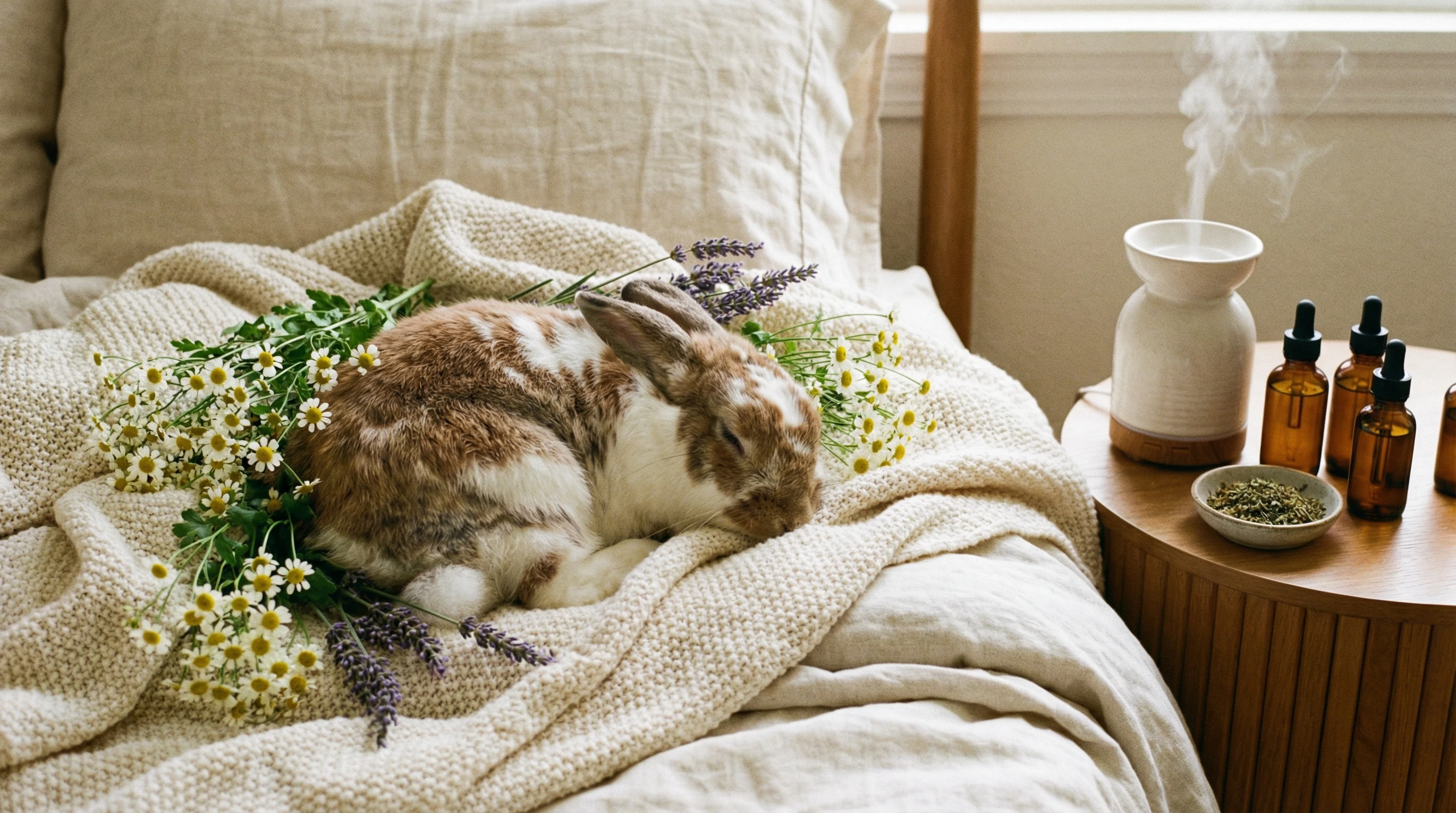
If you have a pet rabbit that deals with anxiety, you’re definitely not alone. Many small animals, especially rabbits, are naturally sensitive to changes in their environment or daily routine. As someone who lives with neurodivergence, I know firsthand how sudden noises or environments can throw me off, and it seems like a lot of rabbits react similarly; they get anxious over little changes or overstimulation. DIY small animalsafe essential oil blends, when made and used carefully, can help support your rabbit’s sense of calm. I’m here to share what I’ve learned about this gentle approach to making your bunny’s space more comforting and less stressful.
Understanding Rabbit Anxiety and Sensory Sensitivity
Rabbits have nervous systems that are wired for survival. Even pet bunnies can react to things like loud household sounds, new smells, or visitors by freezing, hiding, or fidgeting. Some common signs of stress in rabbits include: hiding much of the time, refusing food, thumping, teeth grinding, and sometimes even overgrooming. If you’re neurodivergent or just extra tuned in to environmental triggers, you might recognize some of these patterns from your own sensory experiences. For rabbits, their whiskers, strong sense of smell, and sensitive hearing all play a part in making the world sometimes overwhelming.
Reducing anxiety isn’t just about creating a quieter space. It often involves balancing familiar routines, maintaining predictable sounds and scents, and introducing sensory supports like gentle essential oil blends that are safe for small animals. It’s super important to only use oils that won’t harm your rabbit and to always start slow. No oil blend will “fix” nervousness overnight, and it should really be considered just one supportive piece in a bigger comfort toolkit for both bunnies and humans.
Are Essential Oils Safe for Rabbits?
This is one of the first questions worth asking. Essential oils have strong chemical compounds, derived from flowers, herbs, or peels, that can feel intense even for humans, let alone for rabbits with extra sharp noses. Many popular oils, like tea tree, eucalyptus, peppermint, clove, and cinnamon, are actually toxic for rabbits. Even those considered “safe” can cause problems if used incorrectly or in high concentrations, making it important to be cautious.
From my research and firsthand experience, it’s best to stick with a very limited list of oils considered lowrisk for rabbits. These include lavandula angustifolia (true lavender), chamomile (matricaria recutita or chamaemelum nobile), and sometimes frankincense (boswellia carterii). Always vet your ingredients and make sure to use 100% pure, organic essential oils—no fragrance oils, no weird additives. If you’re neurodivergent and sometimes get overwhelmed by scents, it’s helpful to do a “smell check” yourself before even considering using an oil around your bunny.
Supplies Needed for DIY Rabbit Anxiety Essential Oil Blends
Getting started with homemade blends doesn’t require a chemistry degree but does take careful attention. Here’s what I keep in my kit for making rabbitsafe blends to keep both me and my bunny comfortable:
- Pure essential oil(s): Stick with lavender and chamomile for beginners.
- Carrier oil: Fractionated coconut oil and sweet almond oil are gentle and lowrisk. Some people prefer to use only distilled water (for diffusing, never for direct skin use).
- Dark glass bottles: Essential oils break down in sunlight, so I use amber or bluetinted bottles for all blends to ensure they stay potent.
- Dropper or spray top: For accurate, safe dosing.
- Funnel and small measuring spoons/cups: Makes pouring way less messy and supports reliable, consistent blending (and helps with sensory processing if you dislike strong smells).
Staying organized is very important, especially if crowded counters or unexpected spills are frustrating for you. I keep all my supplies in a small caddy, which also makes cleanup smoother for busy or easily distracted brains. Don’t forget to label each bottle with dates and ingredients, making future use and refills much easier.
Small Animalsafe Essential Oil Blend Recipes
I’ve tried a lot of different calming blends with my own rabbits. Here are two beginnerfriendly options that use only small animalsafe essential oils in gentle dilutions. These blends are designed to support relaxation for pets (and their neurodivergent humans) without overwhelming anyone’s senses. Remember to avoid using blends for situations that might already be overstimulating, and always check how you and your bunny respond to new scents.
Calming Lavender Mist (For Cage or Room Spritzing)
- 2 drops organic lavandula angustifolia essential oil
- 2 ounces distilled water
- Optional: ½ teaspoon witch hazel (to mix the oil and water)
Combine in a spray bottle. Shake very well before each use. Spritz lightly in the air or on fabric near, but not inside, your bunny’s enclosure. Never spray directly on your bunny or their bedding; the goal is to create a gentle, supportive atmosphere, not to overpower the space.
Gentle Chamomile Diffusion Blend
- 1 drop german or roman chamomile essential oil
- Diffuser with 100 mL water capacity
Add one drop of chamomile to your diffuser with 100 mL of water. Run it in a breezy, wellventilated room for about 15 to 20 minutes before your rabbit comes into the room. I always leave the door open so my bunny can leave the space if the scent feels like “too much.”
How to Use Essential Oils Around Rabbits
Rabbits process smells very differently than people do, and their sense of control over their sensory environment is quite limited. I think about this as similar to when I’m in a room with too bright lights or overwhelming background music; I need an exit plan. Here’s how I safely use blends around my pets so everyone feels comfortable:
- Always use the smallest amount possible; less is better.
- Never apply essential oils directly to your rabbit’s fur or skin.
- Test your blend with yourself first before using it anywhere near your pet’s space.
- Open windows or doors so airflow can carry away strong scents quickly.
- Watch your bunny for signs of distress, like nose twitching, hiding, or breathing faster.
- Give your rabbit control; let them leave the room if they want, and never force exposure to scents.
Understanding boundaries and respecting sensory limits is really key for both pets and humans. If your rabbit doesn’t seem to calm down or gets more anxious after trying a new blend, stop right away and stick to nonscented comfort approaches. Sometimes, just adjusting the environment or routine goes a lot further than adding any new scent.
Things to Consider Before Using DIY Essential Oil Blends
There’s more to supporting a rabbit’s anxiety than just adding calming scents. Oils do not replace medical help or proper care. Bunnies need supportive housing, gentle handling, a predictable routine, and access to a vet familiar with small animals.
Some things to think about before trying DIY blends:
- Every bunny is different. What works for one may not work for another, so patience is important.
- Sensory overwhelm can happen quickly, so always observe closely the first few times you introduce any scent.
- Environmental triggers like loud sounds, unpredictable visitors, or odd lighting need to be addressed directly too, not just masked with scent.
- Neurodivergent caregivers might want to track both their pet’s and their own responses, making adjustments based on shared or separate sensory needs.
- If your rabbit has asthma, respiratory problems, or a history of allergies, check with a rabbitsavvy vet before introducing any scentbased solutions, no matter how gentle.
I also keep a journal of what helps and what doesn’t—not just for my rabbit but for myself. Tracking changes helps spot patterns and avoid repeating things that didn’t work. Over time, it has helped me figure out what routines are truly calming and what simply add more confusion or stress.
Lavender: Why It’s So Popular for Calming Small Animals
Lavender gets a lot of attention as a calming scent, and from my experience, it’s usually welltolerated when diluted and offered as a room spray, not a direct application. It’s thought to help reduce nervous system overload and promote a sense of security in many small pets. For people (especially those who are neurodivergent), lavender can also offer gentle sensory grounding without being overwhelming if used in a tiny amount and mixed with plenty of water. The mild, botanical scent also helps turn frenzied days into something more manageable and calm, which is a big bonus for caregivers.
Chamomile: A Gentle Classic
Chamomile has a sweet, grassy scent that’s usually soothing for both humans and animals. It’s associated with reduced stress and improved sleep. Just keep dilution very low, as the scent can build up quickly in small rooms. From my observations, offering chamomile in a room and observing both your bunny’s and your own mood can help you judge if it truly has the relaxing effect you’re hoping for.
Frequently Asked Questions
Here are some questions I hear pretty often when talking to rabbit owners; especially those who themselves are neurodivergent:
How do I know if my rabbit likes or tolerates a certain essential oil?
Answer: Start in a separate area. Introduce the scent by saturating a cotton ball lightly and placing it outside the rabbit’s living space. Watch for signs of curiosity versus avoidance. If your bunny moves away from the scent or shows anxious body language, try a milder option or skip scents altogether. Each animal’s preferences can be unique, so don’t rush the introduction process.
Is there a risk of allergies or negative reactions?
Answer: Definitely a risk; just like neurodivergent people can be sensitive to certain stimuli, some bunnies have strong scent reactions even to safe oils. Never apply oils directly, always use at least a 1:100 dilution, and seek vet advice if you notice anything odd like sneezing or unusual drooling. Slow introduction and vigilance are your best tools for safety.
Can I use essential oils to help during stressful events like vet visits or house moves?
Answer: A very mild calming blend can sometimes help make transitions a little less overwhelming for rabbits. However, make sure to only use scents your rabbit already responds to positively, and provide plenty of hideyholes and support while traveling. Sometimes, just sticking to familiar routines works better than introducing new scents during stressful times.
Bringing Gentle Comfort to Your Rabbit’s Day
Crafting DIY small animalsafe essential oil blends isn’t about masking stress. It’s one of many gentle supports that can make a real difference when used thoughtfully. Tuning in to your rabbit’s cues (and your own) can help everyone in the house, neurodivergent or not, feel a little more grounded, calm, and safe.
Start with small steps, keep an open mind about what works, and always respect both your rabbit’s and your own sensory boundaries. Comfort comes from combining safe, supportive routines, a familiar environment, and maybe a hint of natural scent when it feels right for you and your bun. If you’re ever not sure, consult with a small animal vet who stands behind gentle enrichment strategies to build a happier, more relaxed home for all.