
Just when you think your holiday decor is harmless, your curious pet might be chewing on that bright red poinsettia and you’re suddenly Googling in a panic. You’ve probably heard they’re deadly, but here’s the bold truth – poinsettias are usually not fatal, though they’re definitely not snack material either. If your dog or cat nibbles the leaves, you might see vomiting, drooling, or mild tummy upset, which can still be scary when it’s your furry buddy.
So in this post, you’ll get clear, no-nonsense guidance on how poinsettias really affect your pets, when you should chill, and when you should call your vet fast.
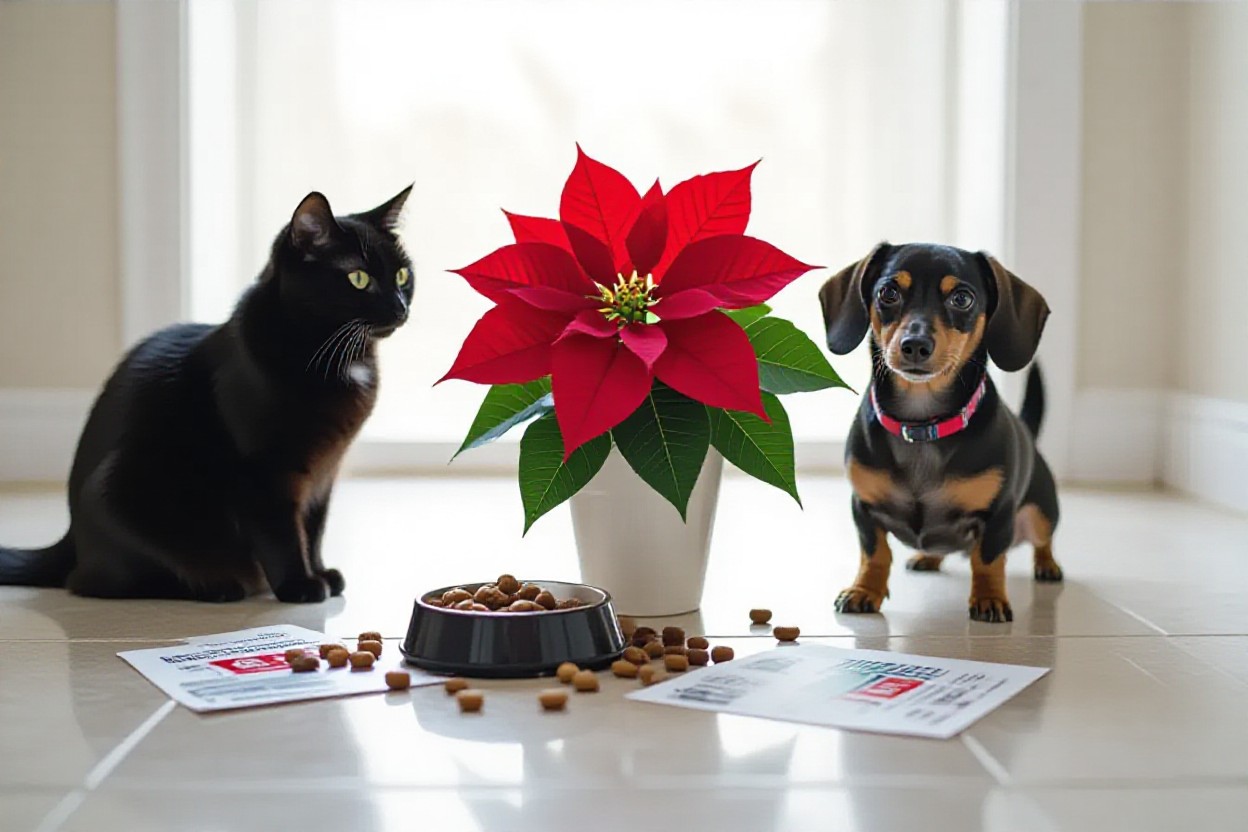
I once had a client rush their dog into the clinic on Christmas Eve clutching a chewed-up poinsettia leaf, absolutely convinced it was game over. The dog? Mildly annoyed stomach, tail wagging like nothing happened. That scene pretty much sums up poinsettias and pets.
Key Takeaways:
- Poinsettias are *not* highly toxic or deadly to cats and dogs – they’re mildly irritating at worst, usually causing drooling, a bit of vomiting, or soft poop if a pet munches a bunch of leaves.
- Most pets that nibble poinsettia just need simple at-home care like monitoring, removing access to the plant, and maybe skipping a meal if their stomach seems off – vets rarely have to do serious treatment for this.
- It’s still smart to keep poinsettias out of easy chewing range, because while they’re not the nightmare plant they used to be blamed for, curious pets plus holiday plants can still mean a messy carpet and a stressed-out evening.
Are Poinsettias Really Poisonous to Pets?
What really matters to you is this: poinsettias are not the pet-killing plant they’ve been made out to be. According to ASPCA data and multiple vet reports, most cats and dogs that nibble a leaf or two just end up with mild signs like drooling, a bit of vomiting, or soft stool. You might see some irritation if that milky sap touches your pet’s skin or eyes, but it’s very rarely serious or life-threatening. The real risk is more about tummy upset than a genuine poisoning emergency.
What Makes Them Dangerous?
The Real Culprit: That Milky Sap
You might picture poinsettias as packed with deadly venom, but what actually causes trouble is the white, sticky latex sap inside the stems and leaves. This sap contains compounds called diterpenoid euphorbol esters and saponins, which are fancy names for stuff that can really annoy your pet’s mouth and stomach. When your dog or cat chews a leaf, you can see drooling, pawing at the face, or even a bit of vomiting – unpleasant, but usually not life threatening. The bigger risk is when a tiny pet eats a whole bunch and gets pretty inflamed all the way down the GI tract.
How Much Is Too Much?
You might be surprised to hear that a pet would have to eat a huge amount of poinsettia to get seriously sick. One old study estimated a 50 pound dog would need to consume several hundred leaves to hit dangerous levels, which just isn’t realistic in normal homes. That said, a 6 pound cat that snacks on multiple leaves can still end up with diarrhea, vomiting, and refusing food for a day or two, which is miserable for both of you. So it’s technically “low toxicity”, but practically speaking, it can still mean an emergency vet visit at 11 pm on Christmas Eve.
Skin, Eyes, And Allergies
You might not think about it, but the sap can mess with skin and eyes too. If your dog brushes against a broken stem and then scratches their face, you can see red, itchy patches or even mild eye irritation. Some pets (and people) are actually allergic to the Euphorbia family, so they can react to just a little contact with hives, swelling, or intense itching. And because pets lick anything that bothers them, that skin irritation can quickly turn into licking, swallowing, and then you get the whole stomach irritation cycle on top.
The Myths vs. The Facts
Separating Scary Stories From Reality
At some holiday parties you’ll hear someone swear their neighbor’s cat almost died just from sniffing a poinsettia, and the story keeps growing every year like a fish tale. In real life, toxicology data on thousands of cases shows something very different: pets typically get only mild symptoms like drooling, lip licking, or a single episode of vomiting after chewing the leaves. No organ failure, no dramatic collapse on the living room floor, just a grumpy stomach and maybe a bit of eye or mouth irritation.
What really flips the script is that vet poison hotlines rank poinsettias way below things like lilies for cats, true holly berries, mistletoe, chocolate, and xylitol. Those are the heavy hitters you actually need to lose sleep over. So while your poinsettia isn’t a salad bar for your dog or cat, if they sneak a nibble you’re usually dealing with a mess to clean up, not a life-or-death emergency.
How to Keep Your Furry Friends Safe
Simple Ways To Pet-Proof Your Poinsettias
Studies show most poinsettia cases in pets end in mild issues, but you still want to stack the odds in your favor by putting plants at least 4-5 feet out of reach. Place pots on high shelves, behind sturdy barriers, or inside rooms your pets rarely enter, and skip those hanging planters if your cat treats them like jungle gyms. If you’ve got a plant-obsessed chewer, you might rotate in pet-safe alternatives like Christmas cactus and keep the poinsettia purely as a photo prop.
Because accidents happen, you should set up a quick-response routine before anything goes wrong. Keep your vet’s number and the ASPCA Animal Poison Control Center (888-426-4435) saved in your phone, snap a pic of the plant tag so you can ID the exact species fast, and clean up any fallen leaves right away so your dog doesn’t treat them like a snack. And if your pet ever starts drooling, pawing at their mouth, or vomiting after nibbling, call a pro – don’t just wait it out.
Signs Your Pet Might Have Taken a Bite
Subtle Clues You Don’t Want To Ignore
You care because you probably won’t catch your pet in the act, you’ll spot the aftermath. Watch for sudden drooling, lip-smacking, or pawing at the mouth – classic “I ate something weird” behavior. Cats might start hiding or acting grumpy, while dogs often get restless or clingy. Even a small nibble can irritate the mouth, so if you see a red tongue, foamy saliva, or tiny chewed poinsettia leaves on the floor, assume they tasted it.
Common Symptoms After A Poinsettia Snack
Most pets that munch poinsettia end up with mild tummy trouble, not life-threatening poisoning. You might see vomiting once or twice, soft stool, or a bit of diarrhea within a few hours. Some pets just seem a little off – less interested in food, more sleepy, maybe licking their lips a lot. If your pet already has a sensitive stomach, those GI issues can look louder and more dramatic than they really are.
When Things Look A Bit More Serious
In rare cases, you can see more intense signs like repeated vomiting, refusal to drink, or weakness that lasts more than a few hours. Because poinsettia sap is a mild irritant, watch for swollen, puffy eyes or red skin where the sap touched, especially in curious dogs that rubbed their face in the plant. Any sign of trouble breathing, wobbliness, or blood in vomit or stool is your cue to stop guessing and get your vet on the phone right away.
What to Do if Your Pet Eats a Poinsettia
Picture this: you walk in and your dog’s proudly sitting next to a chewed-up red leaf, maybe licking his lips like it was a snack. First thing, gently remove any plant bits from your pet’s mouth and offer fresh water. Then watch for drooling, mild vomiting, or soft stool – most pets only get mild, short-lived symptoms. Call your vet or a 24/7 pet poison line within 30 minutes, especially if your cat is small (under 8 pounds) or already has tummy issues.
Final Words
Considering all points, you can relax a bit about poinsettias around your pets, but you still shouldn’t treat them like harmless chew toys. You now know they’re usually only mildly toxic, yet your dog or cat can still end up with an upset stomach or irritated mouth if they snack on the leaves, so it’s worth keeping them just out of reach. Trust your gut – if your pet eats a decent amount or just seems off, you call your vet. That simple move can save you a whole lot of worry.
FAQ
Q: Are poinsettias actually poisonous for pets or is that just a myth?
A: The wild part is that poinsettias got a way worse reputation than they deserve. They’re not the holiday death plant people talk about, but they’re also not exactly pet-safe decor either.
If your dog or cat chews on a poinsettia, the milky white sap in the plant can irritate the mouth, tongue, and stomach. So you might see drooling, pawing at the mouth, a bit of vomiting, or soft poop for a day. It usually looks dramatic but in most cases it’s mild and clears up on its own.
Most vets consider poinsettias “low toxicity” rather than “poisonous” in the scary sense. They’re nothing like lilies for cats or things like xylitol for dogs. Still, if your pet is small, has health issues, or eats a big chunk of the plant, it’s smart to call your vet or an animal poison hotline just to be safe.
Q: What signs should I watch for if my dog or cat eats part of a poinsettia?
A: The first stuff you’ll typically notice shows up around the mouth. Think mild irritation – drooling, lip licking, maybe your pet acts like their mouth feels weird and starts pawing at their face a bit.
Once the plant hits the stomach, you can see some tummy trouble. That might be one or two episodes of vomiting, a little diarrhea, and just plain not wanting their food for a short stretch. Most pets bounce back pretty fast, usually within 24 hours or so.
Anything more intense than that is your cue to get help. So if your pet keeps vomiting, seems super lethargic, has blood in vomit or poop, or you know they chowed down a big amount of the plant, call your vet right away. Better to feel slightly overprotective than to sit there guessing while your pet feels lousy.
Q: How can I safely keep poinsettias at home if I’ve got pets running around?
A: The easiest trick is all about location. Put poinsettias where pets can’t get to them, like on high shelves, tall plant stands, or in rooms your dog or cat doesn’t really hang out in.
Cats being cats, they might still go after them, especially if they like nibbling leaves or jumping everywhere. For cat households, a good move is using closed plant cabinets with glass doors or just swapping poinsettias for pet-safe alternatives like some types of ferns or artificial poinsettias that still look festive without the drama.
It also helps to give your pet more interesting things to chew or explore. Cat grass for cats, puzzle toys and chews for dogs, that kind of thing. And if you know your animal is a serial plant muncher, just skip real poinsettias entirely and go fake – they look good in photos and your couch potato can nap under the tree without you hovering.